
How to Use a Gold Detector Properly: UAE Field-Tested Setup Guide
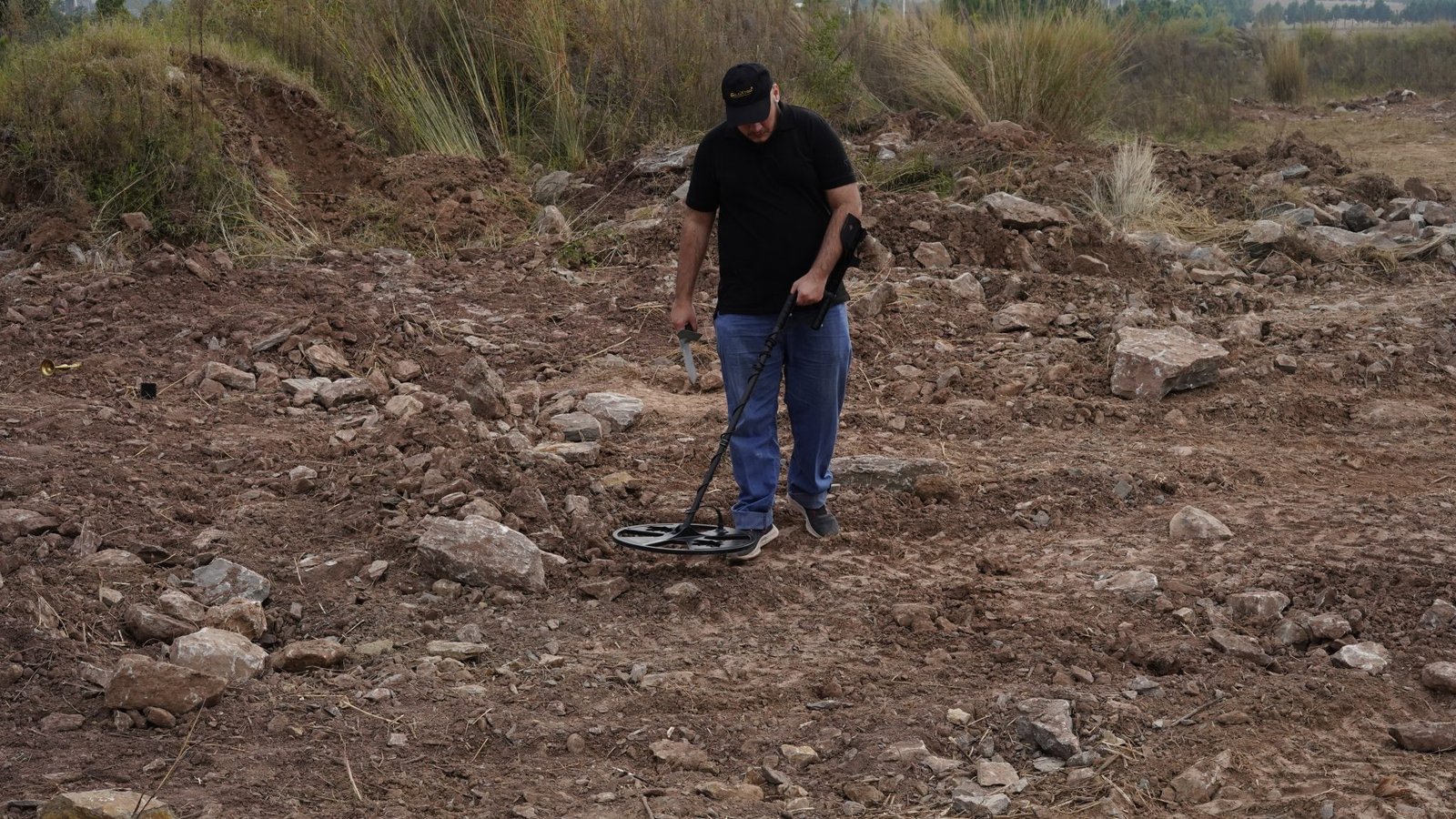
Here's an uncomfortable truth: most people who buy a gold detector never learn to use it properly. They pull it out of the box, crank the sensitivity to max, and wonder why the machine beeps at every rock. If your detector isn't finding what you think it should — or worse, it's found nothing after weeks of hunting — the problem probably isn't the machine. Follow this six-step system and your success rate changes immediately.
Step 1 — Home Prep Before the Field
Half of failed hunts are lost before you leave the house. Do these checks the night before, not in the parking lot of your search site with the sun beating down.
- Full battery + spare: A weak battery drops sensitivity by 20-30%. Always pack backups.
- Coil tightness and cable wrap: A loose coil connector is the #1 source of false signals. The cable should be wrapped around the shaft with no strain on the plug.
- Bench test: Air-test your detector over a small coin, ring, and iron nail. Note the signal for each. If they don't match what you saw last time, something changed.
- Firmware check: Modern Minelab and Nokta machines get free firmware updates that add depth and new features. Update before every big hunt.
Step 2 — Ground Balance On-Site (The UAE Non-Negotiable)
Ground balance is the difference between a detector that finds gold and one that finds noise. UAE soil ranges from mildly mineralized coastal sand to heavily mineralized iron-rich soil near the Hajar range. You must rebalance every time you move to new ground — no exceptions.
- Find a clean patch of soil with no visible metal or trash within a 2-meter radius.
- Slowly bob the coil up and down 5-8 cm above the ground while the detector auto-balances.
- Watch for a stable "no signal" state — this means the machine has learned your ground.
- Rebalance any time you cross into new soil type, wet ground, or shaded/hot ground.
Step 3 — Set Sensitivity Correctly (This Is Where Everyone Fails)
The most common beginner mistake in the entire hobby: assuming higher sensitivity = deeper finds. In UAE ground, high sensitivity produces so much noise that real targets get buried under false signals. You end up chasing ghosts and missing gold.
- Start conservative: Set sensitivity to 60-70% of max for your first pass.
- Test the ceiling: Slowly increase until you hear consistent ground chatter, then drop back one notch.
- Stability beats depth: A stable machine at 70% will out-detect a chattery one at 100%.
- Match to soil: Rocky Hajar ground = lower sensitivity. Clean beach sand = higher.
Step 4 — Master the Sweep
The way you swing your coil determines what you'll find. Bad sweeping technique is why experienced detectorists sometimes find nothing while beginners with the same machine walk out with rings.
- Coil height: Keep 2-4 cm above the ground. Higher = lost depth. Lower = false signals from soil contact.
- Sweep speed: Slow. Smooth. Deliberate. Aim for 3-4 seconds per full left-to-right pass. Fast sweeping is why 80% of small gold gets missed.
- Grid pattern: On a promising site, sweep north-south, then east-west across the same area. Targets that whisper in one direction often shout in the other.
- Overlap: Every pass should overlap the previous one by at least 30%. No gaps. Ever.
Step 5 — Read Signals Like a Pro
Every beep tells a story. Learning to read those stories is what separates weekend hobbyists from consistently successful detectorists.
- Repeatable & consistent: A signal that repeats identically from every angle is almost certainly a solid metal target. Dig it.
- Direction-dependent: A signal that only responds from one direction is usually elongated iron trash (nail, wire, foil).
- VDI (Target ID): Roughly — 0-20 = iron, 20-50 = foil/small coins, 50-80 = larger coins/silver, 80+ = big silver/copper. Gold spans a wide range (25-90 depending on size and karat), so don't dismiss "junk" numbers in gold-bearing ground.
- Faint but repeating: This is deep gold's signature. Beginners ignore these. Pros dig them.
Step 6 — Recover Targets Without Destroying Them
You've earned the beep. Now don't ruin the find with sloppy digging.
- Use your detector's pinpoint mode to narrow the signal to a single 5-cm spot.
- Cut a full circle around the pinpoint — never chop through the target zone directly.
- Lift the plug intact and scan it with your detector. If it beeps, the target is inside.
- Use a hand-held pinpointer to zero in on the exact location within the plug.
- Refill and pack the hole — good habits protect your access to public sites.
Beginner Mistakes That Cost You Gold
- Ignoring soft signals: Deep gold whispers. Loud signals are usually shallow trash. Practice digging faint repeatable signals.
- Skipping ground balance after moving: New spot = new balance. Always.
- Metal on your body: Rings, belt buckles, coin pockets, steel-toe boots — all cause false signals when the coil passes near your feet.
- Never cleaning the coil: Sand and dust in the search coil housing distort signals. Wipe clean after every hunt.
Frequently Asked Questions
How long before I can expect to find gold in UAE?
Realistic expectation: 20-40 hours of field time before you find your first meaningful target. The learning curve is real, but it's steep at first and then flattens quickly.
Should I hunt in summer heat?
Hunt very early morning (5-8 AM) or after sunset. Midday heat degrades battery performance, increases electrical noise, and — obviously — is dangerous. Save Liwa and interior desert hunts for October through April.
Do I need special permission to detect in UAE?
You need permission for private land and are prohibited entirely from archaeological sites, military zones, and border areas. Public beaches and desert areas are generally open, but regulations can change — check with local authorities before major hunts.
Have your machine but need help getting started?
We offer free setup and calibration support with every purchase — including WhatsApp support during your first hunts. Reach out any time.
Browse Detectors →